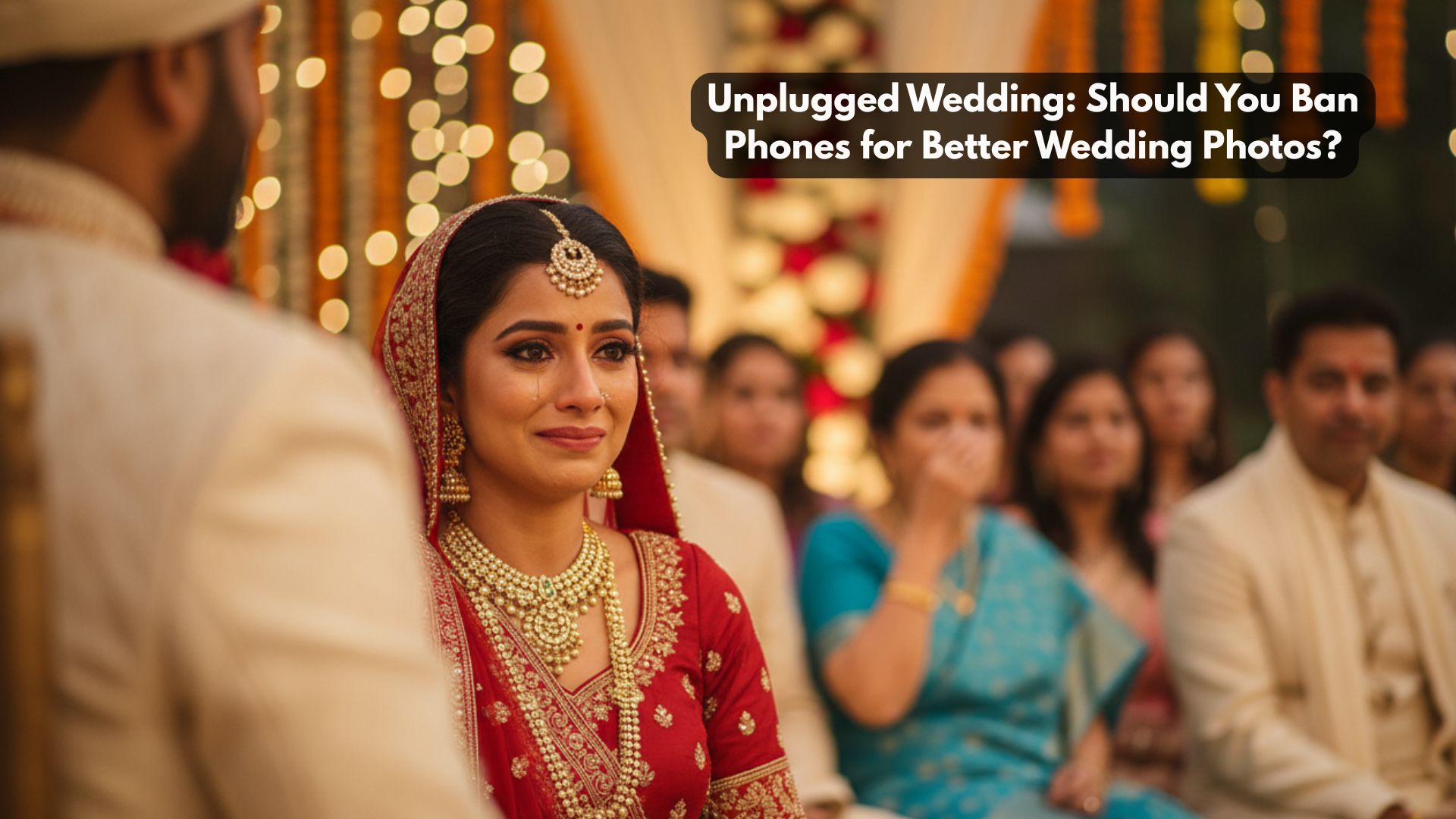
A few months ago, a bride in Pune stopped halfway down the aisle because her uncle stepped into the center with an iPad bigger than the flower arrangement. The photographer missed her father’s expression completely. That one second was gone. Nobody could recreate it.
That’s pretty much why the idea of an Unplugged Wedding keeps showing up everywhere right now. Couples are tired of seeing their guests through phone screens. Photographers are tired of editing around raised arms. And honestly, guests are starting to feel weird too, because everyone wants to record the moment but hardly anyone is fully inside it.
If you’re planning a wedding and wondering whether banning phones is smart or just dramatic, you’re not alone. This article breaks down what an unplugged wedding really means, whether it actually helps your photos, and how to make it work without upsetting your guests. We’ll also talk about the awkward side nobody mentions.
If you’re already planning your big day and want expert guidance before deciding, you can book a quick planning session here: Wedzy appointment booking
And yes, this topic is getting bigger because couples want memories that feel real, not just another Instagram story. Recent wedding trend coverage shows more couples choosing phone-free ceremonies as part of a wider move toward more intentional celebrations.
What does an unplugged wedding actually mean?
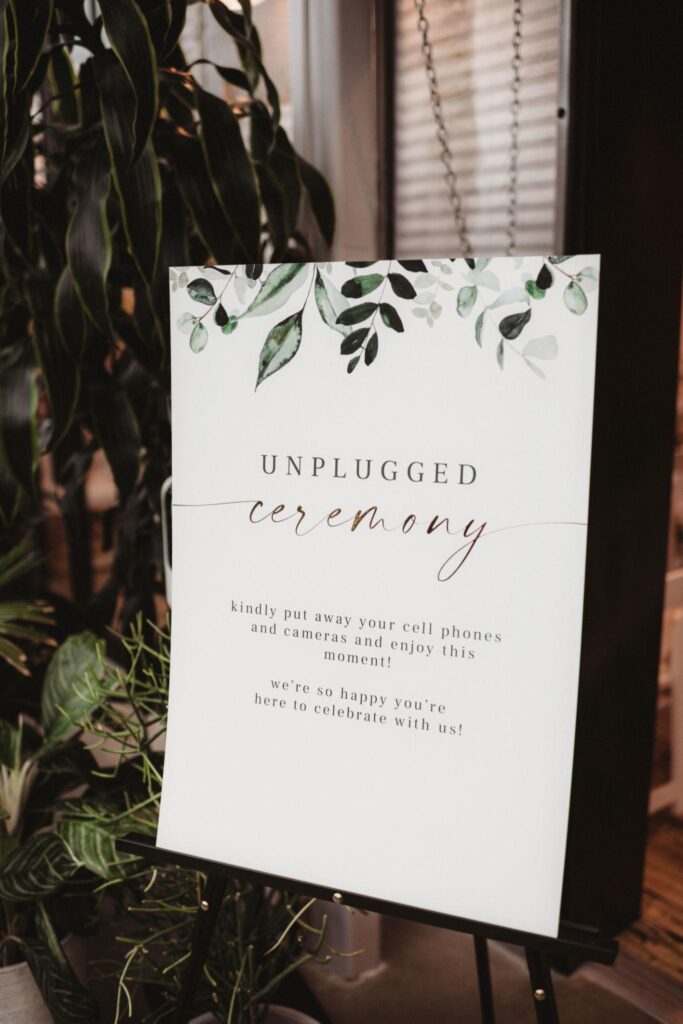
A lot of people think it means taking phones from guests at the entrance. That’s not always the case.
Usually, an unplugged wedding means the couple asks guests to keep phones away during the ceremony. Some extend it to the reception too, but most only care about the key emotional moments. Vows. First kiss. Parents crying quietly in the second row.
I’ll be honest with you. The term sounds strict, but the goal isn’t punishment. It’s just asking people to stop filming every breath.
Last winter, a couple named Arjun and Meera in Jaipur tried this. They put a small wooden sign near the mandap that said, “We hired a photographer. We’d love your eyes, not your phones.” It worked for maybe 80% of the guests. One cousin still livestreamed half the varmala. That’s real life.
So if you’re expecting total silence and zero screens, that may not happen. But even reducing phone use changes the atmosphere a lot.
Why photographers keep recommending an Unplugged Wedding
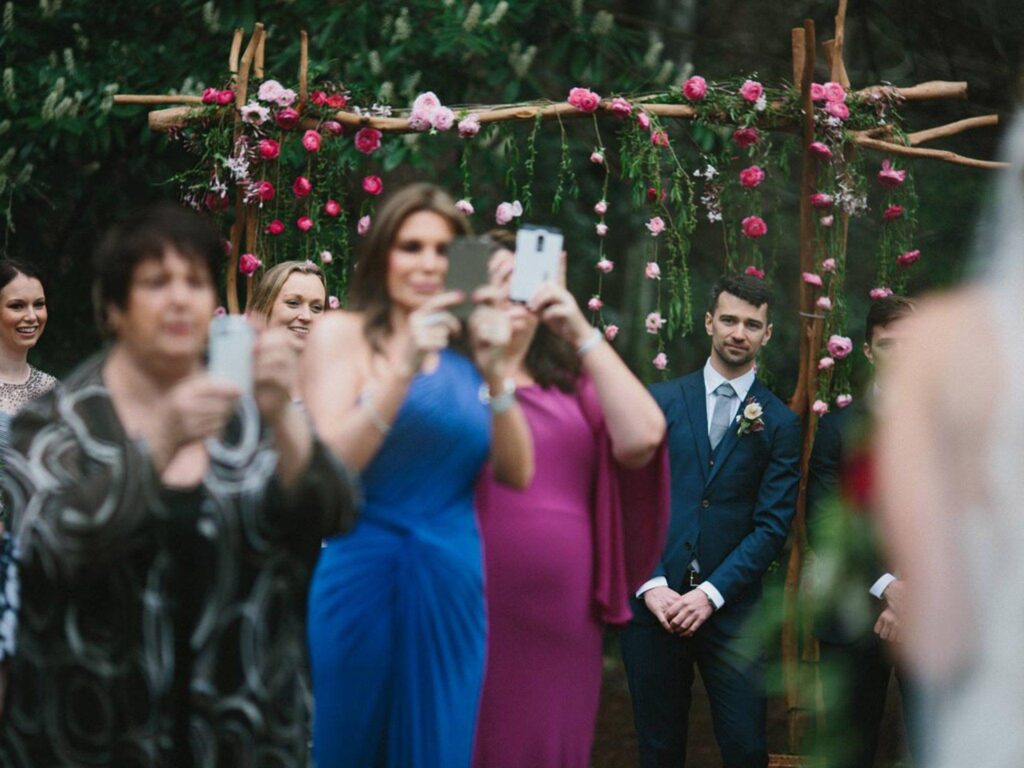
Ask almost any professional wedding photographer and you’ll hear the same complaint: guests accidentally ruin shots all the time.
Not because they mean to. They’re excited. Someone leans into the aisle. Someone lifts their phone right when the bride reaches the front. Someone turns on flash during the pheras and now the whole frame looks strange.
A photographer from Wedzy would probably tell you something simple: the best emotional photos happen when people forget the camera is there.
A wedding in Ranchi last December had this exact issue. During the bride’s entrance, her school friends all rushed forward with phones. The official photographer had to shoot over their shoulders. Later, the couple loved the candid photos from dinner but hated the ceremony album because half the frames had screens in them.
That’s the frustrating part. The ceremony is usually the most expensive part to decorate, and it’s the easiest to accidentally block.
Does banning phones really improve photos?
Short answer? Yes, but not in the magical way social media makes it sound.
Phones don’t automatically ruin every wedding photo. Plenty of beautiful weddings happen with guests filming everything. But unplugged ceremonies often feel calmer, and that changes how people look in pictures.
Here’s the thing nobody really tells you. Great wedding photography is less about the camera and more about reactions.
A grandmother wiping tears. A groom laughing because he forgot the vow card in his pocket. A flower girl sitting down in the aisle because she got bored at 5:47 pm. Those moments happen whether phones exist or not. But if everyone is busy recording, faces look distracted.
Wedding trend reports in 2026 point to a big shift toward documentary-style photos, where photographers capture honest moments instead of stiff poses. That style works better when guests are present, not scrolling between rituals.
The argument against an Unplugged Wedding
This is where the debate gets interesting.
Some people hate the idea.
And to be fair, they have a point.
A wedding is also a family event. Your aunt may want one blurry photo because she’s watched you grow up since nursery school. Your college friend might want a quick selfie because that’s how your group remembers everything.
At a wedding in Delhi, one bride asked for a no-phone ceremony. Her grandmother got upset because she wanted to send a picture to relatives who couldn’t travel. Nobody expected that to become a family discussion ten minutes before the baraat.
So yes, unplugged weddings can feel too controlling if handled badly.
That’s why communication matters more than the rule itself. If guests understand why you’re asking, most are fine. If they feel ordered around, they push back.
Wedding photography tips if you choose a phone-free ceremony
If you’re thinking about doing this, don’t just announce it once and hope.
That never works.
Try these instead:
- Mention it on the invitation
- Add a sign at the entrance
- Ask the officiant or host to remind guests before the ceremony starts
- Tell your photographer so they can plan angles around it
A couple in Mumbai forgot the third step. No verbal announcement. Guests walked in, saw the sign, ignored it, sat down, and kept filming anyway. Half of them probably didn’t even read it.
People don’t come to weddings expecting rules. You have to make it gentle and clear.
One practical idea that’s becoming popular is letting guests use phones after the ceremony only. That keeps the vows private but still gives everyone their fun photos during the reception.
What young couples are doing instead of full bans
This part is interesting because Gen Z couples are changing the whole idea.
Many aren’t banning phones. They’re splitting the day.
Ceremony unplugged. Reception open. Dance floor chaos allowed.
That setup actually makes sense.
A couple in Bengaluru had a QR code at every table where guests could upload their photos directly to a shared gallery. So guests still clicked pictures, but during dinner and dancing, not during the vows. The couple got hundreds of random candid shots. Some were terrible. Some were amazing.
That’s probably the sweet spot for many people.
You get professional ceremony photos without distraction, plus the fun weird guest moments later. One report this year mentioned many couples now keeping both: a polished photographer album and a guest-upload gallery from phones.
Is an Unplugged Wedding rude to guests?
Many people ask me this, and honestly, it depends on how you ask.
If your invitation sounds like a warning, people will talk about it.
If it sounds warm, people usually respect it.
Compare these:
“Phones are prohibited during the event.”
vs
“We’d love for you to be fully present with us and leave photos to our team.”
Same rule. Very different feeling.
At one ceremony in Kolkata, the host made a joke before the vows: “Please keep your phones away. The bride paid too much for makeup to appear only in your blurry camera roll.” Everyone laughed and put them down.
That worked better than any sign.
So no, it’s not rude by itself. Tone decides everything.
Should you do it if photography matters a lot to you?
If your wedding photos are a big priority, then yes, it’s worth seriously considering.
Especially if you’re hiring a documentary-style photographer who depends on natural reactions. Raised screens, flashes, and people stepping into aisles genuinely make their work harder.
But don’t choose an unplugged wedding just because TikTok says it looks classy.
Ask yourself something simple.
Will you actually care if guests take pictures, or are you only worried because someone online said it ruins aesthetics?
A groom in Hyderabad was obsessed with the “perfect” unplugged ceremony idea. On the wedding day, he spent more time noticing who broke the rule than enjoying the ceremony. That defeated the whole point.
So be honest. If phones won’t truly bother you, skip the restriction. If they will, set the rule and stop checking who obeys.
And if you’re unsure how to plan a photography-friendly wedding timeline, it helps to speak with a planner who sees these situations often. You can book a consultation here: Book an appointment with Wedzy
Final thoughts on the Unplugged Wedding trend
An Unplugged Wedding isn’t really about banning technology. It’s about deciding what kind of memory you want from the day.
This article looked at why couples are choosing phone-free ceremonies, how it affects photography, why some guests dislike it, and what modern couples are doing instead of strict bans. If your goal is better wedding photos, fewer screens in the aisle usually helps. That part is pretty straightforward.
But there’s another side. Weddings are messy. Families don’t always follow signs. Some guests will still sneak photos. Someone will definitely think the rule doesn’t apply to them. That’s normal.
So if you choose an unplugged wedding, keep it simple. Explain it early. Say it kindly. Trust your photographer. Then let the day happen.
You don’t need to decide everything today. A good start this week is to ask your photographer one direct question: Have phones ever affected your ceremony shots? Their answer will probably tell you more than any trend article.
That’s usually the fastest way to know whether an unplugged wedding fits your day or just sounds nice on Pinterest.
FAQs
1. What is an unplugged wedding ceremony?
It means guests are asked not to use phones or cameras during the ceremony. Most couples still allow phones during the reception. The idea is to keep people focused on the moment.
2. Do unplugged weddings improve wedding photography?
Usually, yes. Photographers get cleaner shots without screens blocking faces or aisles. The emotional reactions also tend to look more natural when guests aren’t recording.
3. Can guests still take photos at an unplugged wedding?
That depends on the couple. Some allow photos after the ceremony. Others request no photos for the full event, though that’s less common.
4. How do you tell guests about an unplugged wedding?
The best way is to mention it in invitations, signs, and a short announcement before the ceremony starts. Saying it politely makes a big difference.
5. Are unplugged weddings becoming popular?
Yes. Wedding trend coverage in 2026 shows more couples choosing phone-free ceremonies, especially younger couples who want more candid and documentary-style photos.