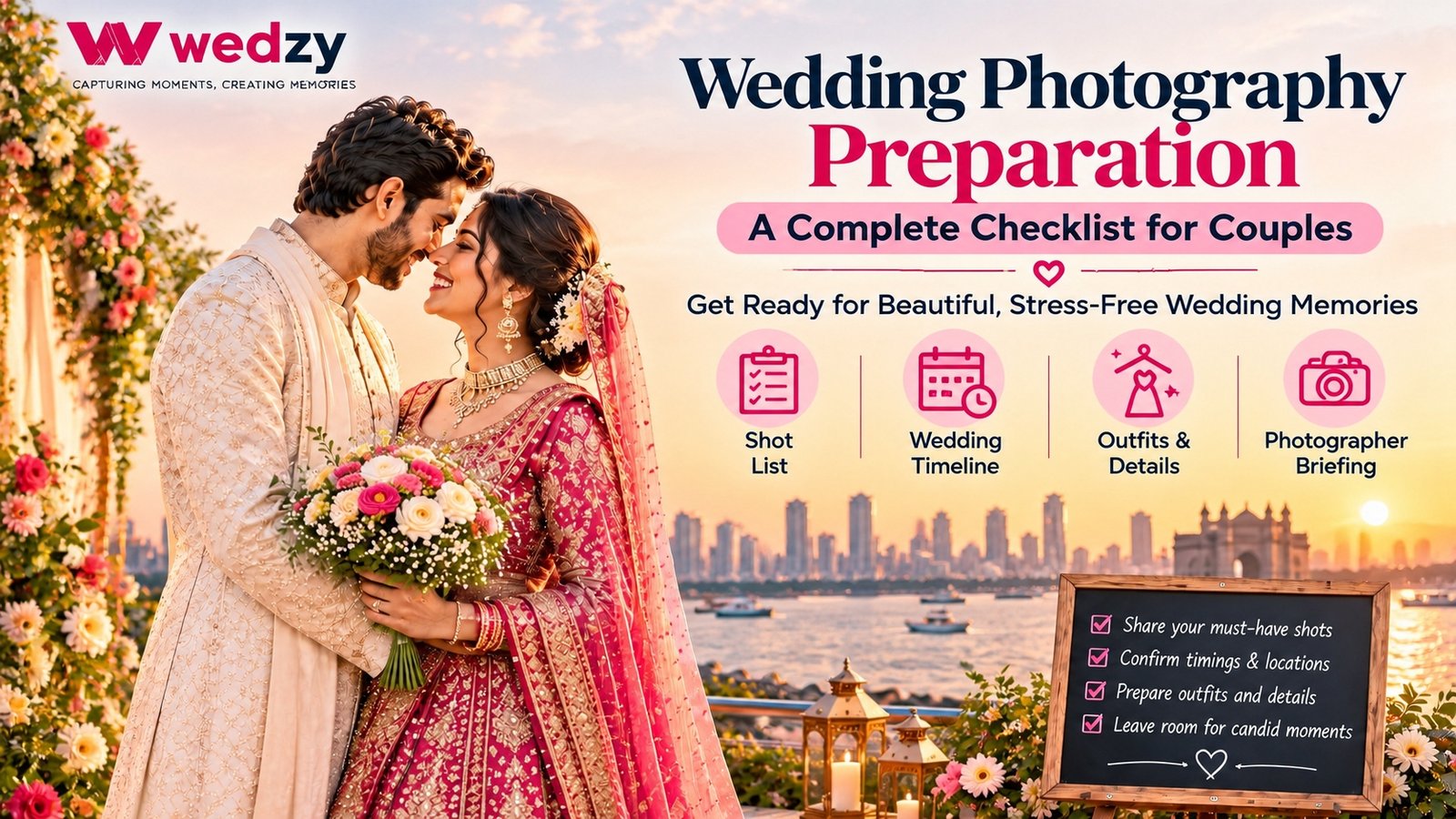
Your wedding day will be filled with moments you may not even realise are happening. Your parents might get emotional during the ceremony, your friends could surprise you on the dance floor, or your partner might give you a smile just before you walk towards each other. These are the little moments that make your wedding photographs meaningful.
However, beautiful wedding photographs do not happen only because you have hired a good photographer. A little planning beforehand can make a real difference to how smoothly the day unfolds and how comfortable you feel in front of the camera.
Wedding photography preparation is about more than choosing poses or creating a shot list. It involves discussing your expectations, organising important details, planning enough time for photographs, and making sure your photographer understands what matters most to you.
If you are wondering how to prepare for a wedding photographer, this practical checklist will help you get organised without making your wedding feel like a photoshoot.

Plan Your Wedding With Verified Professionals
Verified
Professionals
Trusted
Company
Easy EMI &
Secure Booking
Let's get started with a few details ✨
We never share your details.
1. Discuss Your Photography Expectations Early
Before finalising your wedding photography plans, take some time to think about the kind of photographs you want. Every couple has different preferences, and explaining them early helps your photographer understand your vision.
Choose a photography style that feels right
Some couples love candid photographs that capture natural emotions, while others prefer traditional portraits with family members. You may also want cinematic wedding films, documentary-style coverage, or a combination of different styles.
Look through a few complete wedding galleries rather than choosing a photographer based on social media highlights alone. This helps you understand how they capture ceremonies, family photographs, indoor lighting, and emotional moments.
Ask yourself:
- Do we prefer candid photographs or traditional poses?
- Are couple portraits important to us?
- Do we want detailed photographs of our outfits, jewellery, and wedding décor?
- Would we like a wedding film alongside photography?
- Are there cultural or family traditions that must be documented?
You do not need to have every detail decided immediately. Even a general idea gives your photographer a useful starting point.
Share your inspiration without expecting exact copies
Save a few photographs that reflect your preferred mood, lighting, composition, or poses. Share these references with your photographer and explain what you like about them.
For example, you might love a photograph because it captures a genuine laugh rather than because of the pose itself. Explaining that distinction helps the photographer create something personal instead of simply recreating another couple’s pictures.
Internal linking opportunity: Link the phrase candid vs documentary wedding photography to a relevant guide explaining the differences between these styles.
2. Prepare a Wedding Photography Shot List
A shot list helps your photographer understand which people, details, and moments are especially important to you. It also reduces the chances of overlooking meaningful photographs during a busy celebration.
Include the essential wedding moments
Your list does not need to contain hundreds of photographs. Focus on moments that you would genuinely miss if they were not captured.
Consider including:
- Getting-ready photographs of both partners.
- Wedding outfits, jewellery, shoes, invitations, and other personal details.
- Candid moments with parents, siblings, and close friends.
- Important rituals and ceremony highlights.
- The first look, if you have planned one.
- Couple portraits and group photographs.
- The exchange of rings or other significant ceremony moments.
- Family blessings, emotional reactions, and candid interactions.
- Reception entrances, speeches, performances, and dancing.
- A final couple portrait before the celebration ends.
Adapt this list to your wedding traditions and schedule. Some ceremonies have important rituals that an unfamiliar photographer might not immediately recognise.
Identify important family photographs
Family portraits can become surprisingly stressful when everyone is trying to find the right people at the same time.
Prepare a separate list of essential family combinations. For example, you might want photographs with both sets of parents, grandparents, siblings, cousins, and close family friends.
Ask a trusted relative or friend to help gather people when group photographs are scheduled. This person should know the family members and be comfortable calling them over.
It is also worth informing your photographer about any sensitive family circumstances or special requests privately and respectfully.
Practical tip: Share the final shot list with your photographer at least a week before the wedding, preferably earlier if your event involves multiple ceremonies.
3. Plan Your Wedding Day Photography Timeline
One of the most common wedding photography problems is running out of time. Hair and makeup may take longer than expected, ceremonies can start late, and family members may not be ready when planned.
A realistic timeline gives your photographer enough flexibility to capture important moments without making you feel rushed.
Allow enough time for couple portraits
Couple portraits are often easier when you have a little breathing room away from the main celebration. Discuss the locations, lighting, and expected duration with your photographer before the wedding.
As a general starting point, allow around 20–40 minutes for dedicated couple portraits, depending on the location, travel, outfit changes, and number of photographs you want. Your photographer may recommend more or less time based on your plans.
If you prefer natural, candid photographs, you do not need to practise dozens of poses. A few simple prompts, a relaxed conversation, or a short walk together can create more natural expressions.
Keep buffer time between events
Avoid planning every part of your wedding day down to the last minute. A short buffer can help accommodate unexpected delays without affecting the entire schedule.
For example, if your couple portraits are scheduled immediately after a ceremony, allow time for guests to congratulate you and for family photographs to finish.
For weddings with multiple ceremonies, discuss which events need full coverage and which moments can be photographed more briefly.
Internal linking opportunity: Link wedding photography timeline to a detailed guide that explains how to schedule photography around ceremonies, portraits, and reception events.
4. Organise Your Outfits, Accessories, and Personal Details
The small details often carry sentimental value. Your wedding invitation may have taken weeks to design, your jewellery may be a family heirloom, or your shoes may have been chosen specifically for the occasion.
Organising these items beforehand makes it easier for your photographer to capture them without interrupting your preparations.
Create a wedding detail box
Keep the items you want photographed together in one place. Depending on your plans, this could include:
- Wedding rings and ring boxes.
- Invitations and stationery.
- Jewellery, watches, and accessories.
- Perfume, shoes, and outfit details.
- Hair accessories, cufflinks, or other meaningful items.
- Personal letters or gifts exchanged before the ceremony.
Let your photographer know if a particular item has sentimental importance so they can give it appropriate attention.
Keep your getting-ready space tidy
Your preparation room does not need to look perfect. It simply helps if unnecessary bags, plastic packaging, food containers, and unrelated belongings are moved out of the main photographic area.
If possible, choose a room with good natural light and enough space for your photographer to move around comfortably.
Ask your makeup artist, hairstylist, or wedding coordinator about the expected preparation schedule. This helps avoid a situation where the photographer arrives just as the final stages are finishing.
5. Choose Locations and Prepare for Lighting
The location and lighting can influence the appearance of your wedding photographs as much as your choice of poses.
Discuss potential portrait locations with your photographer in advance. They may suggest a quiet corner of the venue, a balcony, a garden, a well-lit room, or an outdoor setting near the ceremony location.
Consider the time of day
Outdoor photographs often benefit from softer light in the early morning or later afternoon. Direct midday sunlight can create harsh shadows, although an experienced photographer can work with it using suitable positioning and equipment.
Indoor venues also need attention. Warm decorative lighting, coloured stage lights, and dim reception halls can affect skin tones and the overall mood of photographs.
Ask your photographer whether they have visited the venue before or would benefit from a short location visit.
Check permissions and travel time
If you want photographs at a separate location, confirm whether photography is permitted and whether advance bookings or fees apply.
Factor in travel time, parking, traffic, and the time needed to return to the ceremony or reception. A beautiful location may not be practical if reaching it makes the rest of your wedding schedule stressful.
For destination weddings or outdoor events, also discuss backup arrangements for rain, strong winds, or extreme heat.
Internal linking opportunity: Link best pre-wedding shoot locations to a relevant location guide, if your website has one.
6. Communicate Clearly With Your Photographer
Even an experienced photographer cannot automatically know your expectations. Clear communication helps both sides work together and prevents avoidable misunderstandings.
Confirm the important details
Before the wedding, confirm:
- The event date, venue addresses, and ceremony timings.
- The agreed photography and videography coverage.
- The number of photographers or videographers attending.
- The key moments and family combinations you want captured.
- The delivery format and estimated turnaround time.
- The album, editing, and final image arrangements included in your package.
- Any venue restrictions or special photography requests.
Keep important information in one written document or message so both you and your photographer can refer to it easily.
It is also worth sharing the contact details of your wedding planner or a trusted family member. That person can help coordinate timings while you focus on enjoying the day.
Be honest about feeling nervous
Not everyone feels comfortable in front of a camera. If you are worried about posing, smiling naturally, or looking awkward, tell your photographer.
A good photographer can offer simple direction, suggest natural movements, and help you relax without making every moment feel staged.
You do not need to become a model before your wedding. Comfortable clothing, enough rest, and clear communication are often more useful than practising complicated poses.
7. Prepare Yourself Mentally and Enjoy the Day
The final part of wedding photography preparation is often the easiest to overlook: giving yourself permission to enjoy the celebration.
You can plan the timeline, prepare a shot list, and organise every important detail, but unexpected moments will still happen. Someone may arrive late, a ceremony may run over time, or the weather may change.
Try to focus on the people around you rather than worrying about how every photograph will look.
Trust your photographer
Once you have communicated your priorities, allow your photographer room to observe and capture moments naturally. Constantly checking whether every picture is being taken can distract you from the experience.
Follow guidance when needed, but do not feel that you must pose throughout the entire event. Some of the most meaningful photographs happen when you are talking with family, laughing with friends, or sharing a quiet moment with your partner.
Look after the basics
Get enough rest, drink water, eat when your schedule allows, and keep essential items accessible. These small steps can help you feel more comfortable during a long celebration.
If you are changing outfits or travelling between venues, ask someone you trust to keep track of your belongings and help you stay on schedule.
Most importantly, remember that your wedding photographs are meant to preserve your memories, not create pressure to perform. The goal is to document your day in a way that feels authentic to you.
Frequently Asked Questions About Wedding Photography Preparation
1. How early should you prepare for wedding photography?
Start discussing your photography style and priorities as soon as you book your photographer. Ideally, finalise the shot list, timeline, venue details, and family photo combinations at least one to two weeks before the wedding.
2. How do you prepare for a wedding photographer?
Share your preferred photography style, prepare a list of essential moments, organise outfits and accessories, confirm the schedule, and communicate any special requirements. Keeping these details organised helps your photographer work efficiently.
3. Should couples practise wedding poses before the wedding?
Practising a few simple poses can help if you feel nervous, but it is not essential. Discuss your comfort level with your photographer and focus on natural movements, genuine expressions, and interactions with your partner.
4. What should you give your wedding photographer before the event?
Provide the event schedule, venue details, important family photo combinations, a list of essential rituals, contact information for the wedding coordinator, and any special requests. You can also share a small collection of inspiration photographs.
5. How can couples get natural wedding photographs?
Choose a photographer whose style you genuinely like, communicate openly, and avoid worrying about every camera click. Focus on interacting with your partner and loved ones. Clear direction and a relaxed atmosphere can help natural moments unfold.
Plan Your Wedding With Verified Professionals
Verified
Professionals
Trusted
Company
Easy EMI &
Secure Booking
Let's get started with a few details ✨
We never share your details.
Conclusion
Good wedding photography preparation is not about controlling every second of your wedding day. It is about giving your photographer the information, time, and flexibility needed to capture the moments that matter to you.
Start with a clear photography plan, prepare a manageable shot list, organise your important details, and discuss the timeline with your photographer. Remember to communicate your expectations and leave room for spontaneous moments.
Use this checklist as a starting point, adapt it to your wedding traditions, and share it with your partner or wedding planner. With thoughtful preparation and the right team, you can spend less time worrying about photographs and more time enjoying the memories you are creating.