Your wedding day moves faster than you expect. One minute you are getting ready, and the next you are walking down the aisle, greeting relatives, posing for family portraits and wondering where the last few hours went.
That is exactly why having a wedding photography shot list can make such a difference.
A good shot list is not meant to turn your wedding into a photoshoot. Instead, it gives your photographer a clear idea of the people, details and moments that matter most to you. From the bride getting ready to the groom’s first look, emotional family interactions and those fun candid moments, a little planning can prevent important memories from being overlooked.
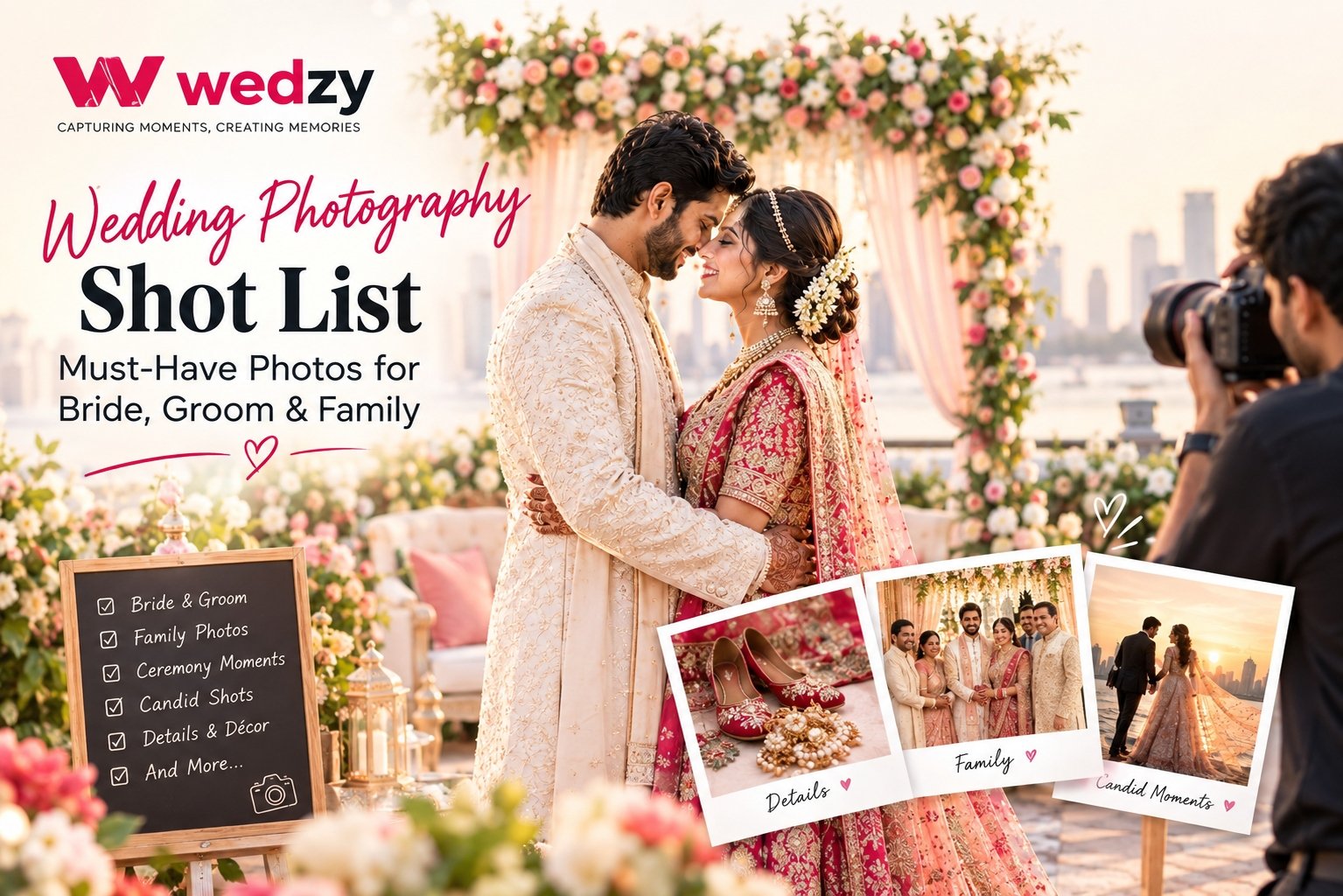
This guide covers the essential photos to discuss with your photographer, including bride and groom portraits, ceremony moments, family wedding photos, details and candid shots.

Plan Your Wedding With Verified Professionals
Verified
Professionals
Trusted
Company
Easy EMI &
Secure Booking

Let's get started with a few details ✨
We never share your details.
Why Do You Need a Wedding Photography Shot List?
Experienced wedding photographers know how to anticipate important moments, but every wedding and every family is different.
You may have grandparents who need to be photographed early, a special family tradition, a close group of college friends, or a particular wedding detail that has personal meaning.
A wedding photo checklist helps you communicate those priorities before the wedding day.
It can also make group photography much smoother. Instead of trying to remember every combination while everyone is waiting, your photographer or a designated family member can simply work through the list.
The key is to keep it realistic.
You do not need a list of 150 individual poses. A useful shot list focuses on the photographs you would genuinely regret not having.
Tip: Share your priority list with the photographer several days or weeks before the wedding, rather than handing it over for the first time on the wedding day.
Bride’s Must-Have Wedding Photos
The bride usually has several important photography moments before and during the ceremony. These photographs should capture both the details and the emotions of the day.
Getting Ready Photos
Some of the most personal photographs happen before the ceremony begins.
Consider including:
- Bride having hair and makeup done
- Wedding dress hanging before it is worn
- Close-up of the bridal jewellery
- Wedding shoes
- Invitation or stationery
- Perfume and other meaningful accessories
- Bride putting on earrings or jewellery
- Parents or bridesmaids helping with the dress
- Bride looking in the mirror
- Final getting-ready portrait
- Candid moments with bridesmaids and family
These photographs help tell the story of the morning rather than showing only the finished look.
Bride Portraits
Once the bride is ready, allow a few minutes for individual portraits.
Ask for a mixture of traditional and natural photographs, such as:
- Full-length bridal portrait
- Close-up portrait
- Veil photograph
- Side profile
- Walking shot
- Portrait with bouquet
- Candid interaction with bridesmaids
- Emotional moment with parents
You do not have to pose for every image. Some of the best photographs happen when the bride simply walks, laughs or talks with someone she is comfortable around.
Groom’s Must-Have Wedding Photos
The groom can easily get overlooked in a busy wedding schedule, especially when most of the attention is focused on the bride.
A simple checklist makes sure that does not happen.
Getting Ready
Useful groom photographs include:
- Groom’s suit or traditional outfit
- Shoes, watch and accessories
- Groom adjusting his outfit
- Parents helping with final preparations
- Friends or groomsmen getting ready
- Groom’s portrait
- Group photograph with close friends
- Natural moments before leaving for the ceremony
If the groom is wearing something culturally significant, such as a sherwani, turban or another traditional outfit, detail photographs can also be worth adding.
Groom Portraits
Try to include a few relaxed portraits rather than only formal poses.
For example:
- Full-length portrait
- Close-up
- Groom with parents
- Groom with siblings
- Groom with friends
- Candid conversation with family
- Groom waiting before the ceremony
These photographs become particularly meaningful years later because they capture how everyone looked and felt before the wedding actually began.
Ceremony Photos You Should Not Miss
The ceremony is where the story of the wedding really unfolds. Your photographer should know which traditions and moments are important in advance.
Some essential ceremony photographs include:
- Venue and ceremony setup
- Guests arriving
- Bride’s entrance
- Groom waiting for the bride
- First look or first reaction
- Couple seeing each other during the ceremony
- Exchange of rings or other important rituals
- Vows
- Emotional reactions from parents
- Friends and family watching
- Key cultural or religious traditions
- Couple’s first moments after the ceremony
- Walking out together
For Indian weddings, there may be several ceremonies spread across multiple days. In that situation, the shot list should be divided by event rather than creating one enormous checklist.
For example, you might create separate lists for the engagement, mehendi, haldi, sangeet, wedding ceremony and reception.
That makes it much easier for the photographer to prepare for each event.
Family Wedding Photos: The Combinations to Plan
Family wedding photos are among the images people often appreciate more as the years pass.
They are also the photographs most likely to become chaotic if nobody has planned them.
Start with the essential combinations.
Bride’s Family
Consider:
- Bride with parents
- Bride with siblings
- Bride with parents and siblings
- Bride with grandparents
- Bride with immediate family
- Bride with extended family, if required
Groom’s Family
Similarly:
- Groom with parents
- Groom with siblings
- Groom with parents and siblings
- Groom with grandparents
- Groom with immediate family
- Groom with extended family
Couple’s Family Photos
Then move to combined photographs:
- Couple with both sets of parents
- Couple with immediate family
- Couple with siblings
- Couple with grandparents
- Couple with parents
- Couple with close relatives
- Couple with important family members
Practical tip: Assign one organised family member to help gather people for these photographs. The photographer should be taking pictures, not spending ten minutes searching for someone’s uncle.
Also, photograph elderly relatives and anyone with mobility concerns earlier whenever possible.
Couple Portraits and Candid Wedding Photos
Once the formal family photographs are finished, give yourself some breathing room.
The couple’s portraits should include a mixture of classic, editorial and candid images.
Couple Portrait Ideas
Ask your photographer to capture:
- Full-length couple portrait
- Close-up portrait
- Walking together
- Looking at each other
- Laughing naturally
- Holding hands
- Traditional outfit portraits
- Wedding ring close-up
- Back-of-the-venue portrait
- Veil or dupatta movement
- A quiet moment together
Do not worry if every photograph does not look perfectly posed.
Often, a photograph of the couple talking between poses feels more authentic than a heavily directed image.
This is also a good opportunity to discuss your preferred photography style beforehand. If you want mostly candid photographs, tell your photographer. If you also want traditional family portraits, mention that too.
Related internal-link opportunity: This section can naturally link to a guide about choosing a wedding photographer or a candid vs traditional wedding photography guide.
Details and Must-Have Wedding Photos
Wedding photography is not only about people.
Years later, small details can bring back memories that you might otherwise forget.
Your photographer can capture:
- Wedding invitation
- Rings
- Jewellery
- Wedding outfits
- Shoes
- Bouquet
- Decorations
- Table settings
- Name cards
- Wedding cake
- Ceremony setup
- Venue exterior
- Floral arrangements
- Special gifts
- Personal or cultural details
You can make this easier by keeping important details together in one place.
For example, put the invitation, rings, jewellery, shoes and other small items in a box before the photographer arrives. This saves time and gives the photographer everything needed for detail shots.
Candid Photos That Tell the Real Wedding Story
A wedding album should not feel like a collection of poses.
Some of the must have wedding photos are actually the moments nobody planned.
Think about:
- Parents seeing the bride or groom for the first time
- Friends laughing together
- Children playing at the venue
- Grandparents watching the ceremony
- Guests dancing
- A spontaneous hug
- Someone wiping away a tear
- Friends helping with outfits
- Guests enjoying dinner
- Couple laughing between photographs
- Reactions during speeches
- Small interactions happening in the background
These photographs add personality to the final album.
When speaking with your photographer, explain which people and relationships are especially important to you. That gives them useful context and helps them notice moments they might otherwise miss.
How to Organise Your Wedding Photography Shot List
A simple structure works better than a huge document.
Divide your checklist into these categories:
- Bride getting ready
- Groom getting ready
- Wedding details
- Ceremony
- Bride’s family
- Groom’s family
- Couple portraits
- Friends and wedding party
- Candid moments
- Reception and farewell
Mark your highest-priority photographs separately.
For example, if a photograph with your grandparents is particularly important, label it as a priority. This helps the photographer understand what cannot be missed if the schedule runs late.
You should also discuss the timeline.
A photographer may need only a few minutes for some portraits, while large family groups can take considerably longer. Building realistic time into the schedule will help you enjoy the wedding instead of constantly rushing from one photograph to another.
FAQ: Wedding Photography Shot List
How many photos should be on a wedding photography shot list?
There is no fixed number. A practical shot list usually focuses on important people, family combinations, wedding details, key ceremony moments and a few specific requests. Keep it manageable so the photographer can still capture spontaneous moments.
What are the must-have wedding photos?
Must-have wedding photos generally include getting-ready moments, bride and groom portraits, family photographs, ceremony highlights, couple portraits, important details and candid interactions with guests.
Should I give my photographer a wedding photo checklist?
Yes. A short checklist is useful, especially for family combinations and personal requests. It gives your photographer a clear understanding of what matters most to you without restricting their creative approach.
How do I make family wedding photos less stressful?
Prepare the family combinations in advance and ask one trusted person to help gather relatives. Start with elderly family members and keep the list organised so people are not standing around for too long.
Should every wedding photo be posed?
No. A strong wedding album usually includes a mixture of posed portraits, formal family photographs, documentary moments and candid images. The combination creates a more complete story of the day.
Plan Your Wedding With Verified Professionals
Verified
Professionals
Trusted
Company
Easy EMI &
Secure Booking
Let's get started with a few details ✨
We never share your details.
Final Thoughts
A good wedding photography shot list is not about controlling every second of your wedding. It is simply a safety net for the photographs that matter most.
Plan the essential family combinations, tell your photographer about meaningful traditions, allow time for bride and groom portraits, and leave enough freedom for genuine candid moments.
Most importantly, think about the photographs you will want to see ten or twenty years from now. Those are the images that deserve a place on your checklist.
Before the wedding, review your list with your photographer and make sure the timeline allows enough time for the priority photographs. You can also explore a related guide on how to choose the right wedding photographer to make sure your photography style, expectations and wedding-day plans are aligned.