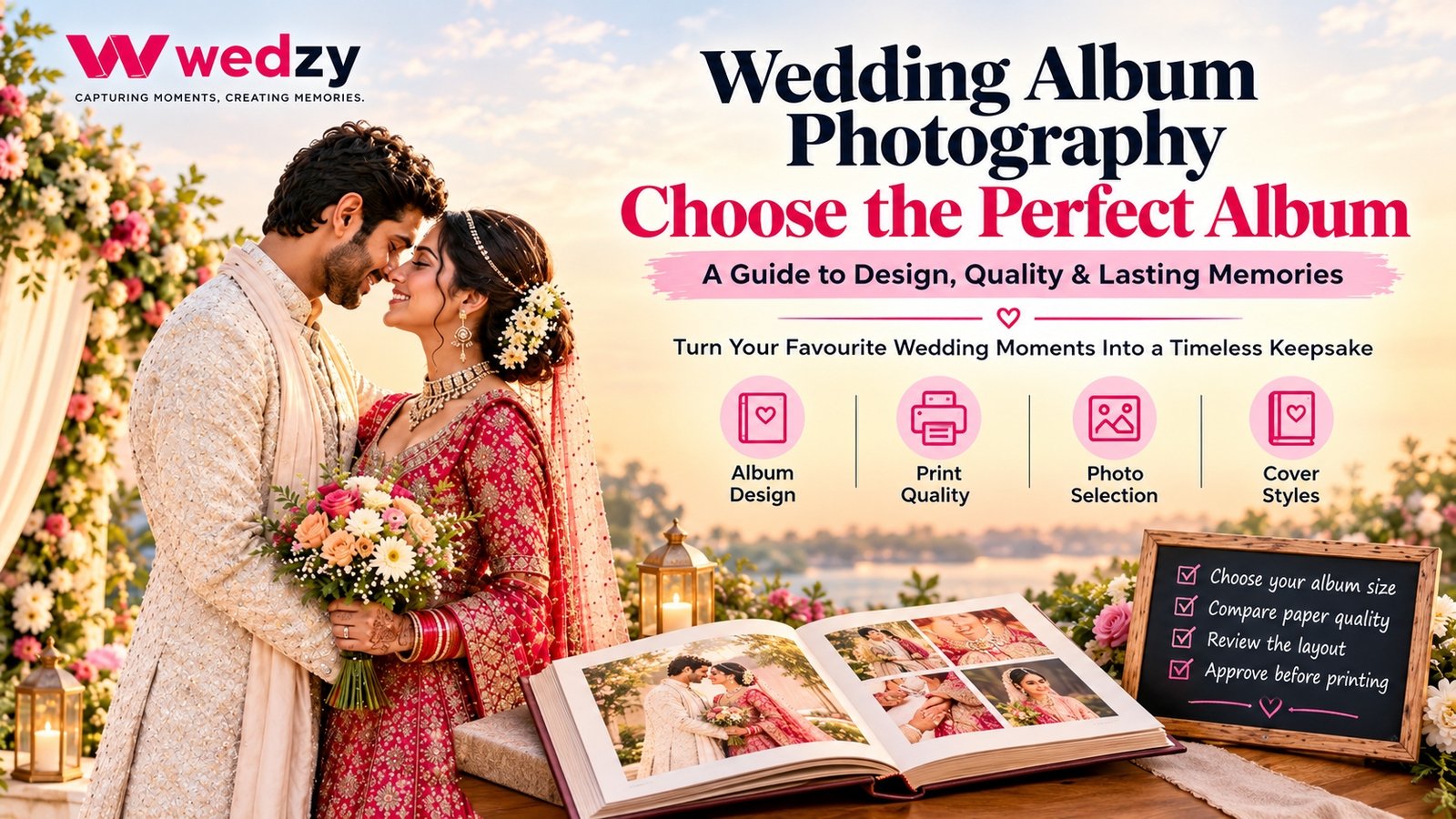
Your wedding day passes in a blur of rituals, laughter, emotional moments and celebrations. Before you know it, the decorations are gone, the guests have returned home, and everyday life begins again. What remains are the memories—and the photographs that help you relive them.
Most couples receive hundreds, sometimes thousands, of digital wedding photos. But how often do you actually sit down and look through all of them? Pictures saved on a phone or laptop can easily get buried under new files, screenshots and everyday photographs.
That is where wedding album photography becomes meaningful. A thoughtfully created wedding album brings your favourite moments together in one place, from the nervous excitement before the ceremony to the smiles shared during the final celebration.
Choosing an album, however, involves more than selecting a cover. Paper quality, layout, photo selection, size and printing all influence the final result. This guide explains how to choose a wedding album that reflects your story, suits your preferences and remains enjoyable to revisit for years.

Plan Your Wedding With Verified Professionals
Verified
Professionals
Trusted
Company
Easy EMI &
Secure Booking
Let's get started with a few details ✨
We never share your details.
1. Understand the Different Types of Wedding Albums
Before deciding on a design, understand the album styles available. Each offers a slightly different way to present your wedding photographs.
Traditional Wedding Albums
Traditional albums often feature individual photographs mounted on pages. They may have a classic appearance, with carefully arranged portraits and formal wedding pictures.
This style can suit couples who prefer a simple, elegant presentation rather than elaborate layouts. It is also a good option if you want family portraits and important ceremony photographs to stand out.
Flush-Mount Wedding Albums
Flush-mount albums use thick, sturdy pages on which photographs are printed across the page surface. Many designs allow images to extend across a double-page spread, creating a seamless visual experience.
These albums work particularly well for wide venue photographs, wedding stage decorations, couple portraits and group celebrations.
Lay-Flat Wedding Albums
Lay-flat albums open almost completely flat, making it easier to view photographs across two connected pages. This is useful when a single image deserves a wider presentation.
For example, a beautiful photograph of the couple during their pheras or a panoramic picture of the wedding venue can be displayed without the usual deep curve near the binding.
Which wedding album should you choose? Select a traditional album for a classic look, a flush-mount album for a premium printed presentation, or a lay-flat album if you want large photographs to flow across the pages.
Before ordering, check the actual sample album. The terms used by different photographers and album manufacturers may overlap, so the construction and printing specifications matter more than the name alone.
2. Choose a Wedding Album Design That Tells Your Story
A beautiful wedding album design should feel like a story rather than a random collection of pictures. The aim is not to squeeze every photograph onto the pages. It is to give the important moments enough space to be appreciated.
Start With the Main Wedding Moments
A well-planned album usually follows the natural flow of the celebration. Depending on your wedding, you might include:
- Getting-ready photographs and details of the wedding outfit.
- Candid moments with parents, siblings and close friends.
- The arrival of the bride or groom.
- Important rituals and ceremony highlights.
- Couple portraits and family photographs.
- Reception celebrations, speeches, dancing and candid interactions.
You do not need to include every event if the album is becoming too large. Choose photographs that represent the atmosphere of the day and the people who made it special.
Keep the Layout Clean
One common mistake is trying to fit too many photographs onto every page. While this may seem economical, it can make the album difficult to enjoy.
Use larger images for emotional moments and standout portraits. Smaller photographs can work well for details, candid sequences and groups of related pictures.
For example, a page featuring the bride and groom together might need just one strong portrait and two complementary candid photographs. A page showing pre-wedding preparations could accommodate several smaller images that capture the activity.
Match the Design to Your Personality
Some couples prefer minimal layouts with white space and clean typography. Others enjoy colourful designs that reflect the energy of a traditional Indian wedding.
Both approaches can work. The important thing is consistency. Avoid mixing too many fonts, borders, background colours and decorative effects.
Ask your photographer or album designer for a digital proof before printing. Review the sequence, spelling, cropping and overall balance carefully.
Related internal link opportunity: Link the phrase candid vs traditional wedding photography to your relevant Wedzy guide, if the page is live.
3. Select the Right Album Size, Cover and Paper Quality
The appearance of your album matters, but its physical construction determines how it feels to hold and how well it suits your needs.
Choose a Practical Album Size
Large albums make portraits and full-page photographs more noticeable. They can be ideal for a main wedding album that will be shared with family.
Smaller albums are easier to carry, store and give as gifts. Some couples choose a large main album alongside smaller parent albums, depending on their budget and photographer’s available options.
Before confirming the size, consider where you will store the album and how you expect to use it. A very large album may look impressive, but a manageable size can be more convenient for regular viewing.
Compare Cover Materials
Common cover options include:
- Linen: Offers a soft, understated appearance and suits minimalist designs.
- Leather or leatherette: Creates a classic, formal finish, depending on the material used.
- Photographic cover: Displays a favourite photograph on the front.
- Custom-designed cover: Can include names, wedding dates or subtle personalised details.
Ask whether the material is genuine leather, a synthetic alternative or another fabric. Product descriptions can vary, so confirm the specifications instead of relying on the label alone.
Understand Paper and Printing Quality
Paper finish affects how colours, skin tones and fine details appear. Glossy paper can make colours look vivid, while matte finishes generally reduce reflections and provide a softer appearance. Lustre finishes offer a middle ground, depending on the printing process.
Ask your photographer about the paper type, print method, page thickness and binding. Request a physical sample if possible.
Also check how the album manufacturer handles colour correction. A photograph that looks balanced on a screen may print differently because screens emit light while printed photographs reflect it.
No album is completely immune to ageing, moisture or sunlight. Good materials, careful handling and appropriate storage can help preserve your photographs for longer.
4. Decide How Many Photos to Include
There is no fixed number of photographs that every wedding album should contain. The right number depends on the album’s size, the number of pages, the events covered and the layout.
A compact album might focus on the most memorable highlights, while a larger album may include multiple ceremonies, extended family portraits and more candid moments.
Instead of choosing photographs only by quantity, ask yourself three questions:
- Does this picture capture an important moment or relationship?
- Does it add something different to the story?
- Is there another photograph that communicates the same moment more effectively?
If several pictures look almost identical, keep the strongest one or two. If a series captures a meaningful sequence—such as a family member’s emotional reaction during a ceremony—consider including more than one.
Make sure the album represents both sides of the family and includes the people who matter most to you. It is easy to focus on couple portraits and overlook photographs with grandparents, relatives or close friends.
Before finalising your selection, review the album with your partner. You may each have different favourite moments, and that conversation can help create a more personal collection.
Related internal link opportunity: Add a contextual link to your Wedzy article about how many photos you get from a wedding photographer, provided the page is live and relevant.
5. Understand Wedding Album Photography Costs
Wedding album prices vary according to the specifications, materials, size and number of copies. There is no single price that applies to every photographer or album company.
The final cost may depend on:
- Album dimensions and number of pages.
- Paper quality and printing method.
- Cover material and personalisation.
- The number of photographs and design revisions.
- Additional parent albums or duplicate copies.
- Delivery charges and applicable taxes.
When comparing quotes, check what is actually included. One photographer may offer a fixed number of album pages, while another may charge for additional spreads. A package with a lower starting price may not include the same paper quality or cover options as a more comprehensive package.
Ask these questions before paying:
- How many pages are included in the quoted price?
- Are design changes included, and how many revisions are allowed?
- Will I approve the final design before printing?
- Are extra pages, duplicate albums and shipping charged separately?
- What happens if the printed album arrives damaged or has a production defect?
Get the specifications and final price in writing. This makes it easier to compare options fairly and reduces confusion later.
If your budget is limited, consider a smaller main album with a carefully selected set of photographs. A well-edited album can feel more meaningful than a larger one filled with repetitive images.
6. Common Wedding Album Mistakes to Avoid
Even excellent wedding photographs can lose their impact when the album is poorly planned. A few simple checks can help you avoid unnecessary disappointment.
Choosing a design before selecting the photos: Start with your favourite images and the story you want to tell. Then select a layout that supports them.
Overusing filters and effects: Heavy editing can make skin tones and colours look unnatural. Aim for a consistent style that still feels authentic to the day.
Ignoring cropping and page boundaries: Important details can disappear near the edges or centre of a spread. Review how faces, hands, outfits and decorations appear in the final layout.
Approving the design too quickly: Check names, dates, image order, missing photographs and repeated pictures. Ask someone you trust to review the proof if you want a fresh perspective.
Leaving the album unfinished: Many couples postpone choosing photographs because the process feels time-consuming. Set aside time to review the images and agree on a selection soon after receiving the final gallery.
Focusing only on appearance: An album should also be practical to handle and store. Check its weight, binding, page thickness and cover material before confirming the order.
Frequently Asked Questions About Wedding Album Photography
1. What is wedding album photography?
Wedding album photography refers to selecting, arranging and presenting wedding photographs in a professionally printed album. It combines photo selection, album design, printing and binding to create a physical record of the wedding.
2. How many photos should a wedding album have?
The number depends on the album size, page count and design. Choose enough photographs to cover the important people, ceremonies and emotions without repeating similar images unnecessarily. Ask your photographer how many photographs are recommended for the specific album you have selected.
3. Which wedding album design is best?
The best wedding album design is one that suits your personal taste and presents your photographs clearly. Minimal layouts work well for a clean look, while more detailed layouts can accommodate colourful celebrations and multiple events. Review a sample album before deciding.
4. Is a lay-flat wedding album worth choosing?
A lay-flat album can be worthwhile if you want panoramic photographs or images across a double-page spread. However, compare the construction, print quality, size and price with other options before making your decision.
5. How can I keep my wedding album in good condition?
Store your album in a cool, dry place away from direct sunlight. Handle the pages with clean, dry hands and avoid placing heavy objects on the cover. Follow the manufacturer’s care instructions, particularly for albums with delicate covers or specialised printing.
Plan Your Wedding With Verified Professionals
Verified
Professionals
Trusted
Company
Easy EMI &
Secure Booking
Let's get started with a few details ✨
We never share your details.
Conclusion: Create an Album You Will Love Revisiting
A wedding album is more than a collection of printed pictures. It brings together the people, emotions and little details that made your celebration unique.
When choosing wedding album photography, focus on the quality of the printing, the practicality of the album, a thoughtful wedding album design and a selection of photographs that genuinely matter to you. Review the final proof carefully and confirm all costs and specifications before printing.
Take your time, compare a few physical samples and discuss your preferences with your photographer. If you are still planning your wedding photography, explore related guides on Wedzy to understand photo styles, package inclusions and album options before making your final decision.