
Your wedding day is filled with moments you may wish you could pause for a little longer. The way your partner looks at you during the ceremony, a quiet smile before the wedding rituals begin, or a spontaneous laugh while posing for photographs—these are the memories that make wedding pictures special.
Good bride and groom photography is not just about standing together and smiling at the camera. It is about capturing your connection, personalities, and the little details that make your relationship unique. Some couples love romantic portraits, while others feel more comfortable with candid pictures that show their natural expressions.
The good news is that you do not need to be a professional model to get beautiful wedding photographs. With the right photographer, a little preparation, and a few simple pose ideas, you can create pictures that feel genuine rather than forced.
In this guide, we will explore creative bride and groom wedding poses, practical photography tips, location ideas, and ways to prepare for photographs that you will enjoy looking at for years to come.

Plan Your Wedding With Verified Professionals
Verified
Professionals
Trusted
Company
Easy EMI &
Secure Booking
Let's get started with a few details ✨
We never share your details.
1. Choose Bride and Groom Photography Styles That Feel Natural
Before deciding on specific poses, think about the kind of photographs you want to remember. Your photography style influences everything from the expressions captured to the way your pictures are edited.
Candid wedding photography
Candid photography focuses on real emotions and unscripted interactions. Instead of asking you to hold a particular pose, the photographer observes and captures moments as they happen.
For example, a photograph of the bride laughing at something the groom says can feel more personal than a perfectly arranged smile. Other memorable moments include holding hands before the ceremony, sharing a private joke, or looking at each other during the wedding rituals.
Candid photography works especially well for couples who feel awkward when someone asks them to pose repeatedly.
Traditional wedding portraits
Traditional portraits are planned photographs in which the couple looks towards the camera or follows the photographer’s directions. These pictures are useful for wedding albums, framed photographs, and family keepsakes.
You might want a formal portrait in your wedding outfits, a photograph with your parents, or a picture together after the ceremony.
A balanced wedding photography plan includes both candid moments and a few carefully arranged portraits. This way, you get emotional storytelling as well as the classic photographs your family may expect.
Romantic and editorial photography
Romantic portraits often use soft lighting, thoughtful compositions, and gentle interactions. Editorial-style photographs may include dramatic poses, interesting backgrounds, and creative use of wedding outfits.
For this style, your photographer might ask you to walk slowly together, stand close while looking away from the camera, or turn towards each other during a quiet moment.
Internal linking opportunity: Link the phrase candid vs documentary wedding photography to your related guide explaining the differences between these photography styles.
2. Beautiful Bride and Groom Wedding Poses to Try
You do not need dozens of complicated poses to create a beautiful wedding album. A few comfortable movements and genuine expressions can produce a variety of photographs.
The classic hand-in-hand pose
Stand beside each other and hold hands naturally. You can look at the camera, smile at each other, or look towards the ceremony venue.
This simple pose works well for full-length portraits because it shows your outfits, jewellery, footwear, and overall wedding styling.
For a more relaxed result, avoid gripping your partner’s hand too tightly. Let your arms rest comfortably and maintain a posture that feels natural.
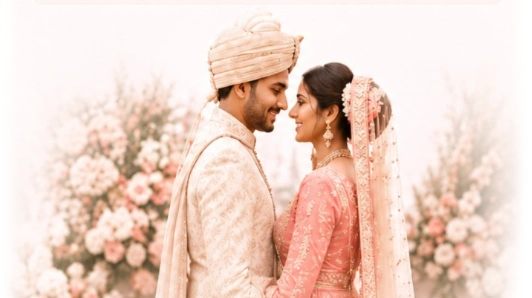
The forehead-touch pose
Stand close together and gently bring your foreheads together. You can close your eyes or smile softly while facing each other.
This pose creates an intimate photograph without requiring an elaborate setup. It works particularly well in quieter moments, such as before the ceremony or after the main wedding rituals.
The walking-together pose
Instead of standing still, walk slowly together while holding hands. Talk, smile, or look at each other as you move.
Movement often helps couples relax because they have something natural to do rather than worrying about how they look in front of the camera.
Ask your photographer to take several frames while you walk. The best photograph may be the one captured between two planned poses.
The veil or dupatta portrait
For a traditional bridal look, your photographer can frame the couple using the bride’s veil or dupatta. The groom can stand beside her, gently hold her hand, or look towards her.
Pay attention to the lighting and the arrangement of the fabric so that important details remain visible. The goal is to complement your wedding attire, not hide your expressions.
The candid laughter pose
Think about something that genuinely makes both of you laugh. Your photographer can encourage a short conversation, a playful interaction, or a shared joke.
These photographs often become favourites because they show your personalities rather than a rehearsed expression.
The silhouette pose
A silhouette photograph places the couple against a bright background, such as a sunset or a softly illuminated window. Your outlines become the main focus of the image.
This style works best when the light is positioned behind you and your photographer can control the exposure. It is a useful option for couples who want a dramatic portrait without an elaborate background.
Practical tip: Save four or five pose references that you genuinely like. Share them with your photographer, but allow room for spontaneous ideas on the wedding day.
3. Make the Most of Your Wedding Location and Lighting
The background and lighting can change the entire mood of a photograph. You do not necessarily need an expensive venue or a famous location to create beautiful bride and groom photography.
Use natural light when possible
Soft natural light can help create flattering portraits and preserve the details of your wedding outfits. Early morning and late afternoon often provide softer light outdoors than the harsh midday sun.
If your wedding takes place indoors, a window with indirect daylight can be a useful portrait spot. Your photographer should check that the light falls evenly across both faces.
Bright sunlight can also work, but it may create strong shadows or make you squint. A shaded area or a change in camera angle can help.
Choose backgrounds that complement your outfits
Look for settings that add character without distracting from the couple. Examples include floral decorations, architectural details, a garden pathway, an elegant staircase, or a simple wall with an interesting texture.
If your wedding outfits feature heavy embroidery, jewellery, or detailed patterns, a less crowded background may help those details stand out.
Plan for the actual wedding schedule
Indian weddings often involve multiple ceremonies, outfit changes, family photographs, and tightly planned rituals. Leaving portraits until the last few minutes can make the experience stressful.
Discuss your schedule with your photographer in advance. Even a short, dedicated portrait session can give you time for a few relaxed photographs away from the busiest parts of the celebration.
If you are getting married in Mumbai, for example, indoor venues, landscaped hotel spaces, and covered outdoor areas can offer different photography opportunities. Weather, humidity, traffic, and the timing of your ceremonies may affect which options are practical.
Internal linking opportunity: Add a link to your guide on the best time of day for wedding photography when discussing light and portrait timing. If relevant, you can also link to a guide about wedding photography preparation.
4. How to Look Comfortable and Confident in Wedding Photos
Many couples worry about looking awkward in front of the camera. This is completely understandable, especially if you do not regularly take professional photographs.
The solution is not to memorise every pose. It is to create an environment where you can relax.
Talk to your photographer before the wedding
Explain what makes you comfortable and what you would prefer to avoid. If you dislike stiff poses, ask for more candid photographs. If you want formal family portraits, include them in the photography plan.
Sharing these preferences beforehand gives the photographer a clearer understanding of your expectations.
Practise a few simple movements
You can practise holding hands, standing at a slight angle, walking together, or turning towards each other. These are easy movements that can be adapted to different backgrounds and outfits.
Avoid spending hours rehearsing expressions. Your natural smile is usually easier to maintain when you are relaxed.
Pay attention to posture and hands
Small adjustments can improve a portrait. Stand comfortably, relax your shoulders, and avoid locking your knees. Instead of letting your hands hang stiffly, hold your partner’s hand, adjust a sleeve, or rest your hand gently on their arm.
The bride and groom should both feel comfortable with any pose involving physical closeness. A good photographer will guide you without making you feel pressured.
Allow time for breaks
Wedding days can be tiring, especially when several ceremonies take place over many hours. If you are exhausted, it may become harder to enjoy the photography session.
Keep water nearby, plan a short break when possible, and avoid scheduling every portrait back-to-back. A calm couple generally has more room to enjoy the experience.
Internal linking opportunity: Link wedding photography preparation to your couple’s checklist article, where readers can find more ways to get ready before the photographer arrives.
5. Capture the Small Details That Tell Your Story
Wedding photographs become more meaningful when they include more than posed portraits. The smaller details often help bring the whole day back to life.
Photograph your wedding outfits and accessories
Set aside time for close-up photographs of the bride’s jewellery, mehendi, footwear, dupatta, and other personal details. The groom’s sherwani, watch, shoes, safa, or boutonniere may also deserve a few frames.
These photographs are especially useful before the ceremony, when the outfits and accessories are freshly arranged.
Include genuine interactions between ceremonies
Some of the most personal moments happen when nobody is formally posing. You might share a quick conversation, help your partner adjust an outfit, or exchange a smile while waiting for the next ritual.
Let your photographer know that these in-between moments matter to you. They can watch for them instead of concentrating exclusively on scheduled portraits.
Make space for family photographs
Couple portraits are important, but wedding albums also tell the story of the people who celebrated with you.
Plan photographs with parents, grandparents, siblings, and close friends. If there are particular family members you want to include, share their names with the photographer or a designated family coordinator.
A written list is helpful when the celebration is busy and many guests are waiting for photographs.
Keep your album balanced
A thoughtful wedding album usually includes a mixture of wide venue shots, couple portraits, candid interactions, close-up details, ceremony photographs, and family pictures.
You do not need every photograph to be dramatic. Some simple images become more meaningful with time because they preserve the people, clothing, and atmosphere of the day.
Internal linking opportunity: Link the phrase wedding photography shot list to your detailed checklist article. You can also link wedding album photography to your guide on choosing and designing a wedding album.
6. Plan Your Bride and Groom Photography Checklist
A little planning can prevent unnecessary stress and help you get the photographs you value most.
Before the wedding, discuss the following points with your photographer:
- Must-have portraits: Decide which couple poses and formal portraits are important to you.
- Photography schedule: Identify suitable times between ceremonies for couple portraits.
- Preferred style: Share examples of candid, traditional, romantic, or editorial photography.
- Important details: Mention jewellery, accessories, outfit details, or personal items you want photographed.
- Family group shots: Prepare a list of essential family combinations.
- Location options: Identify a primary portrait area and a backup location in case of rain or scheduling changes.
- Final deliverables: Confirm the expected number of edited photographs, delivery timeline, album options, and any additional services in writing.
You should also ask whether the photographer will have an assistant or second photographer, particularly if you have a large wedding with simultaneous events.
Do not assume that every package includes the same services. Clarifying the details before booking helps avoid misunderstandings later.
Most importantly, treat your pose list as a guide rather than a strict set of instructions. Some of the most memorable photographs happen when you stop thinking about the camera and enjoy being together.
Frequently Asked Questions About Bride and Groom Photography
1. What are the best bride and groom wedding poses?
Some popular options include holding hands, walking together, touching foreheads, sharing a candid laugh, and standing close for a romantic portrait. The best poses are the ones that feel comfortable and reflect your relationship.
2. How can we look natural in wedding photographs?
Focus on your partner instead of the camera, keep your shoulders relaxed, and move naturally between poses. Talking, walking, or sharing a joke can help you feel less conscious of being photographed.
3. When should bride and groom portraits be taken?
Couple portraits can be taken before the ceremony, between wedding rituals, or after the ceremony. Early morning and late afternoon may offer softer outdoor light, but your photographer should plan around the venue, weather, and wedding schedule.
4. How many poses should we prepare for wedding photography?
Preparing around five to eight reference poses is a practical starting point. This gives your photographer an idea of your preferences without making the session feel overly planned. Your photographer can adapt those ideas to the location and available time.
5. How do we choose a photographer for bride and groom photography?
Review complete wedding galleries rather than judging a photographer by a few social media highlights. Look for consistent image quality, natural expressions, good lighting, and experience with weddings similar to yours. Discuss the package, delivery timeline, editing style, and backup arrangements before booking.
Plan Your Wedding With Verified Professionals
Verified
Professionals
Trusted
Company
Easy EMI &
Secure Booking
Let's get started with a few details ✨
We never share your details.
Conclusion
Beautiful bride and groom photography does not depend on perfect poses or an extravagant location. It comes from capturing the connection between two people, the details of their wedding day, and the moments they may not even realise are being photographed.
Choose a few poses you love, communicate openly with your photographer, plan enough time for portraits, and leave room for candid moments. A combination of relaxed couple portraits, meaningful details, and family photographs will help tell a fuller story of your celebration.
Before finalising your photography plans, explore related wedding photography guides and prepare a checklist of the moments you want to preserve. The aim is simple: create photographs that feel like you and remain meaningful long after the wedding day has passed.