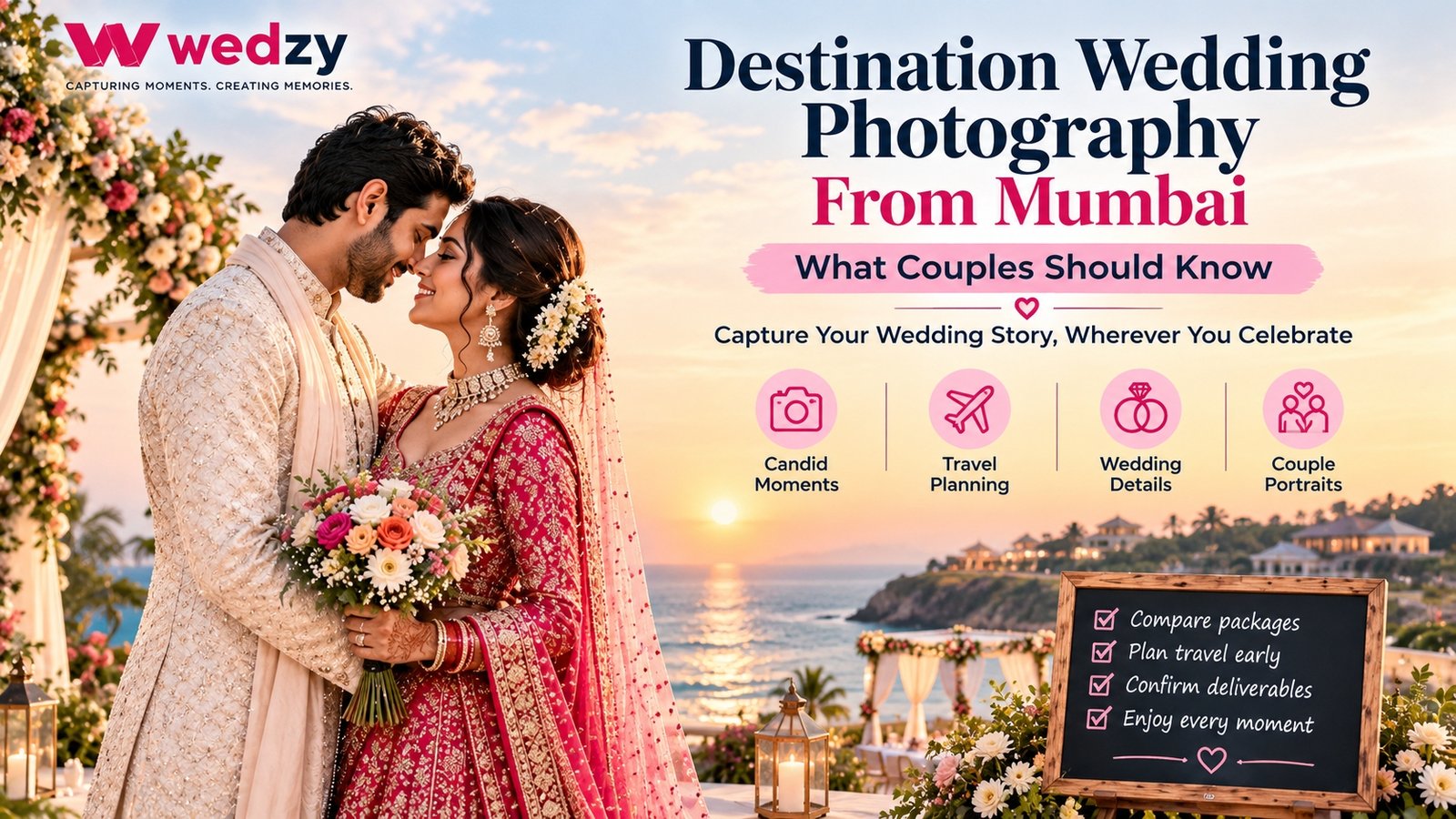
Imagine exchanging vows against the backdrop of a beautiful beach, celebrating your wedding in a royal palace, or taking your pheras in the peaceful surroundings of the mountains. A destination wedding can make your special day feel even more memorable. But while choosing the venue and outfits is exciting, finding the right photographer for a wedding away from home requires a little extra planning.
For couples based in Mumbai, destination wedding photography involves more than booking someone with a good portfolio. You need a photographer who understands your vision, can travel to the venue, manages changing schedules, and captures genuine emotions without making every moment feel staged.
This guide explains how to plan destination wedding photography from Mumbai, what to look for in a photographer, how destination wedding photography packages work, and which questions you should ask before booking. With the right preparation, you can enjoy your wedding while trusting someone to preserve the moments that matter most.

Plan Your Wedding With Verified Professionals
Verified
Professionals
Trusted
Company
Easy EMI &
Secure Booking

Let's get started with a few details ✨
We never share your details.
1. Why Destination Wedding Photography Needs a Different Approach
A destination wedding is different from a traditional wedding in Mumbai. The celebration may continue over two or three days, with separate functions such as mehendi, haldi, sangeet, the wedding ceremony, and a reception.
Each function has its own atmosphere. The laughter during haldi, emotional family moments before the ceremony, and excitement on the dance floor all deserve attention.
A destination wedding photographer needs to understand the complete celebration rather than focus only on the main ceremony.
Choosing a photography style that suits your wedding
Before contacting photographers, think about how you want your wedding memories to look.
- Candid photography: Ideal for couples who want natural expressions, spontaneous laughter, and emotional moments without constant posing.
- Traditional photography: Useful for family portraits, group photographs, rituals, and important ceremonial moments.
- Documentary wedding photography: Focuses on telling the story of the celebration through real events as they unfold.
- Cinematic wedding films: Bring together meaningful moments, music, storytelling, and carefully edited video footage.
Many couples prefer a combination of these styles. For example, you might want candid photographs during the mehendi, traditional family portraits before the wedding ceremony, and a cinematic film capturing the entire celebration.
Discuss these preferences before finalising your booking so the photographer can plan the right team and coverage.
Why destination experience matters
A photographer who regularly covers destination weddings may be better prepared for travel delays, tight event schedules, difficult lighting, and last-minute venue changes.
For instance, an outdoor ceremony in Goa may look beautiful in the late afternoon, but the photographer must also consider the sunset time, lighting conditions, and the possibility of rain.
Experience does not guarantee that everything will go perfectly. However, a photographer with a clear backup plan can help reduce unnecessary stress.
2. Popular Destination Wedding Locations for Couples from Mumbai
One advantage of planning a destination wedding from Mumbai is the variety of locations available within India. Your choice can depend on your budget, guest list, wedding theme, and preferred travel arrangements.
Goa for a relaxed beach wedding
Goa is a popular choice for couples who want a beachside celebration, resort wedding, or intimate gathering with close friends and family.
The natural surroundings can create beautiful photographs during sunset, while resort venues offer opportunities for poolside celebrations and outdoor ceremonies.
However, beach weddings require careful planning. Strong sunlight, wind, humidity, and sudden weather changes can affect photography. Ask your photographer how they handle outdoor conditions and whether they recommend a separate location for couple portraits.
Udaipur for a royal wedding atmosphere
Udaipur appeals to couples who love grand architecture, lakeside views, palace-inspired venues, and traditional Indian celebrations.
The location offers plenty of visual variety, from elegant venue entrances to detailed mandap decorations and evening receptions.
When planning photography here, confirm whether the venue requires advance permission for particular locations, equipment, or portrait sessions. Some venues may restrict access to certain areas.
Jaipur for heritage-inspired celebrations
Jaipur is worth considering if you prefer colourful architecture, traditional outfits, and a royal setting.
The city’s heritage-style venues can complement detailed bridal portraits, family photographs, and wedding ceremonies filled with traditional customs.
Allow enough time for portraits without rushing through important rituals. If the venue is large, ask your photographer to visit or review the layout in advance.
Other locations worth considering
Depending on your preferences, you can also explore Kerala for scenic resort weddings, the mountains for a smaller celebration, or a luxury property closer to Mumbai to reduce travel requirements.
Practical tip: Choose the destination first, then discuss photography logistics. Travel time, venue access, event schedules, and local restrictions can all influence the final plan.
Suggested internal link: Add a relevant Wedzy guide to pre-wedding shoot locations in Mumbai or destination wedding planning, if a suitable live page is available.
3. How to Choose the Right Destination Wedding Photographer
Your photographer will spend a significant part of the celebration with you and your family. Beyond attractive pictures on social media, look for someone whose work, communication, and working style suit your expectations.
Review complete wedding galleries
A social media portfolio usually features the photographer’s strongest images. These photographs can be impressive, but they do not always show how consistently the photographer covers an entire wedding.
Ask to see one or two complete wedding galleries. Check whether the photographer captures:
- Bridal and groom preparation.
- Family interactions and emotional moments.
- Important rituals and ceremonial details.
- Couple portraits in different lighting conditions.
- Group photographs and guest interactions.
- Reception celebrations and dance performances.
A complete gallery gives you a better understanding of the photographer’s approach than a collection of selected highlights.
Check the team and equipment
A large destination wedding may need more than one photographer. If several functions happen simultaneously, having a suitable team helps ensure that important moments are not missed.
Ask who will personally cover the wedding, how many photographers and videographers will attend, and whether backup cameras and essential equipment will be available.
Also discuss what happens if a team member becomes unavailable unexpectedly. A clear answer can give you greater confidence in the booking.
Look for communication and planning
A good photographer should listen to your preferences instead of pushing a fixed style or package.
During your discussion, explain which moments matter most to you. Perhaps you want candid pictures of your grandparents, detailed photographs of your wedding jewellery, or a complete record of traditional rituals.
Share these priorities in advance. It helps the team understand your expectations and prepare a realistic shot list.
4. Understanding Destination Wedding Photography Packages
One of the biggest questions couples ask is how much destination wedding photography will cost. The answer depends on the destination, number of functions, size of the photography team, duration of coverage, and final deliverables.
Destination wedding photography packages may include photography, videography, travel arrangements, editing, albums, and cinematic films. However, inclusions differ from one photographer to another.
What should a package include?
Before comparing prices, check whether the quotation clearly explains the following:
Photography coverage: Confirm the number of hours, functions, and days included. A package covering the wedding ceremony alone may not include the mehendi or reception.
Team size: Ask how many photographers and videographers will attend each function.
Travel and accommodation: Check whether flights, local transport, accommodation, and meals are included in the quoted price or charged separately.
Edited photographs: Confirm the approximate number of edited images, delivery format, and expected timeline.
Wedding film: If you want a highlight film or longer wedding video, clarify the duration, editing style, audio coverage, and delivery format.
Albums and prints: Ask about album size, number of pages, paper quality, and whether extra copies cost more.
Additional charges: Check the cost of overtime, extra functions, additional shooting days, drone coverage where permitted, and any requested changes to the agreed deliverables.
How to compare packages fairly
The lowest quotation is not necessarily the best value. A cheaper package may cover fewer hours, have a smaller team, or exclude travel and accommodation.
Similarly, the most expensive package may include services you do not need.
Create a simple comparison based on your actual requirements. For example, if your wedding spans three days, compare the total cost of coverage for all three days rather than looking only at the starting price.
Ask for a written quotation that clearly lists inclusions, exclusions, payment milestones, cancellation terms, and delivery timelines. This helps avoid misunderstandings later.
5. Planning Travel, Timelines, and Wedding-Day Coverage
Good planning allows your photographer to focus on capturing meaningful moments instead of solving avoidable logistical problems.
Book early and confirm travel arrangements
Once your venue and wedding dates are confirmed, begin shortlisting photographers. Popular photographers may have limited availability during peak wedding periods.
For destination events, clarify who will book flights, accommodation, and local transportation. If the photographer is travelling with a team, confirm the number of people who need arrangements.
It is also sensible to discuss travel delays and backup plans. Depending on the location and schedule, arriving ahead of the first function may be more practical than travelling on the wedding morning.
Prepare a photography timeline
Share the complete wedding schedule with your photographer, including venue access times, makeup arrangements, ceremony timings, and planned family portraits.
Build some flexibility into the schedule. Indian wedding functions can run late, and family members may need additional time to get ready.
If couple portraits are important to you, reserve a short window for them rather than trying to fit them into an already crowded schedule.
Make a priority shot list
You do not need to direct every photograph. Instead, prepare a short list of moments that are especially important to your family.
These might include the bride’s entry, the groom’s reaction, the exchange of garlands, pheras, family blessings, and photographs with relatives who have travelled a long distance.
Share the list before the event. Your photographer can then combine these priorities with spontaneous moments throughout the celebration.
Suggested internal link: Add a relevant Wedzy article about wedding photography checklists or wedding-day photography timelines, after confirming that the page is live.
6. Contracts, Permissions, and Final Delivery
Before paying an advance, read the photography agreement carefully. A written contract protects both the couple and the photography team by setting clear expectations.
Confirm the important details in writing
Your agreement should mention:
- Wedding dates, venues, and functions covered.
- Total price, advance payment, and remaining payment schedule.
- Travel and accommodation responsibilities.
- Expected deliverables and estimated delivery dates.
- Cancellation, postponement, and refund policies.
- Backup arrangements if the lead photographer cannot attend.
- Image usage, privacy preferences, and portfolio permissions.
If you prefer not to have your wedding photographs shared publicly, discuss this before signing the agreement. Confirm how the photographer will handle privacy requests and whether any additional conditions apply.
Check venue rules before the wedding
Some venues restrict flash photography, tripods, drones, or access to particular areas. Religious ceremonies may also have rules about where photographers can stand.
Confirm the requirements with the venue and share them with your photography team. Drone use, in particular, must comply with applicable aviation rules, permissions, and local restrictions.
Understand the delivery process
Ask how your photographs will be delivered and how long editing is expected to take. The timeline may vary depending on the number of functions, images, albums, and films involved.
Also clarify whether RAW files are included. Many photographers deliver selected edited images rather than all original camera files, so do not assume that RAW files will automatically be part of the package.
Knowing these details in advance makes the experience more straightforward after the wedding.
Frequently Asked Questions
1. How much does destination wedding photography from Mumbai cost?
The cost depends on the destination, number of wedding functions, team size, travel arrangements, and final deliverables. Request a customised quotation that separates photography fees from travel, accommodation, albums, and additional services.
2. What is included in destination wedding photography packages?
Packages may include candid and traditional photography, videography, edited images, wedding films, and albums. Travel and accommodation may be included or charged separately. Always check the written inclusions before booking.
3. When should we book a destination wedding photographer?
It is sensible to start researching photographers as soon as your wedding date and destination are confirmed. Booking early gives you more time to compare portfolios, discuss requirements, and finalise travel arrangements.
4. Should we hire a local photographer or bring a team from Mumbai?
Both options can work. A Mumbai-based photographer may already understand your preferences and communication style, while a local photographer may reduce travel expenses and know the venue area. Compare portfolios, logistics, experience, and the complete quotation before deciding.
5. How many days of photography coverage do we need?
For a wedding with mehendi, haldi, sangeet, the main ceremony, and a reception, you may need coverage across multiple days. Choose the schedule according to your actual functions rather than paying for unnecessary hours or leaving important events uncovered.
Plan Your Wedding With Verified Professionals
Verified
Professionals
Trusted
Company
Easy EMI &
Secure Booking
Let's get started with a few details ✨
We never share your details.
Conclusion
Destination wedding photography is about preserving the atmosphere, emotions, and personal details that make your celebration unique. For couples planning their wedding from Mumbai, the best approach is to choose a photographer whose style matches their vision, compare packages carefully, and settle travel arrangements and deliverables before the event.
Take time to review complete wedding galleries, discuss your priorities, and read the contract. A little preparation can make the photography process much easier and help you enjoy your celebration without constantly worrying about the camera.
If you are beginning your search, explore relevant wedding photography guides on Wedzy and shortlist photographers whose work feels right for your celebration. Contact your preferred team with your wedding dates, destination, and event schedule to request a clear, customised quotation.